
Container construction turns shipping containers into habitable modules: offices, site camps, studios, lodges or homes. Fast and robust, it still requires real design work in a tropical climate: insulation, ventilation, corrosion protection and compliance. Well designed, it becomes durable architecture; poorly designed, it remains a temporary shelter.
Contents
Site offices, studios, lodges, shops, homes: container construction is increasingly popular in Senegal. Fast, robust and modular, it meets a real need. But a container is not a building: turning it into one takes design, engineering and careful execution.
What is container construction?
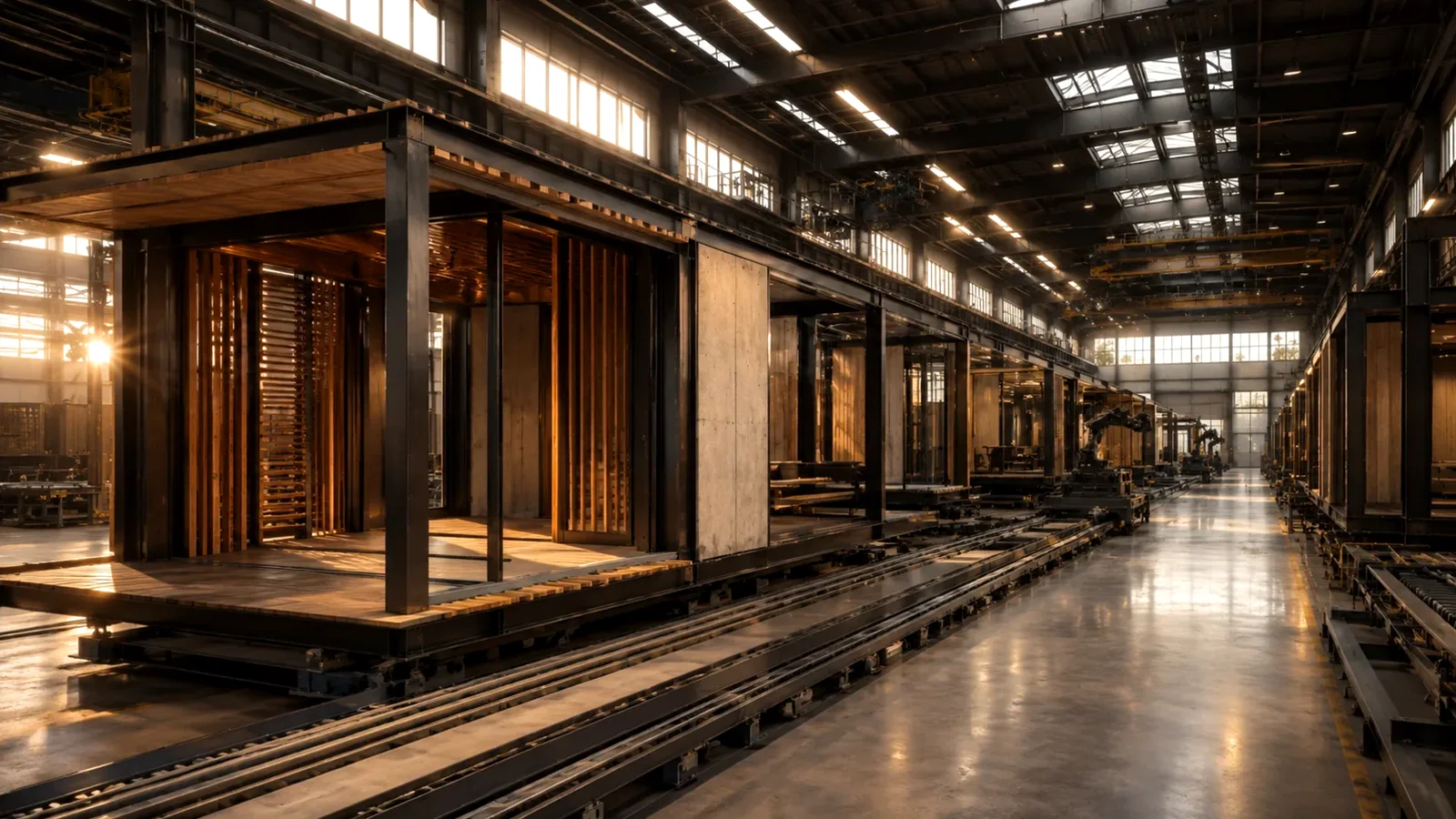
The idea is to reuse shipping containers (standard 20 ft and 40 ft formats) as structural modules. A 40 ft container offers around 28 m² of interior space, the size of a studio, an office or a hotel room. Modules are cut, insulated and fitted with services and joinery in the workshop, then transported and placed on foundations prepared on site.
It is one form of modular construction: most of the building is made off site, under controlled conditions, then assembled.
Why containers appeal
- Speed: workshop fit-out runs in parallel with the foundations, so the building is operational much sooner.
- Robustness: a container is built for the sea and for stacking; its steel structure is strong.
- Repetition: one module, one room; ten modules, ten rooms. The standard format lends itself to series production.
- Reuse: some modules can be moved or repurposed, which appeals to companies and construction site camps.
Limits to know about in a tropical climate
Containers also have constraints, and they are stronger under the West African sun:
- Thermal comfort: steel conducts heat. Without serious insulation, a ventilated double roof and cross ventilation, a container becomes an oven.
- Corrosion: on the Petite Côte or in Dakar, salty air attacks steel. Anti-corrosion treatment, waterproofing details and maintenance are part of the project from the design stage.
- Openings: cutting large openings weakens a container. Every large window requires reinforcement; beyond a certain volume, the series advantage disappears.
- Compliance: a permanently occupied building must comply with planning and safety rules. A lender or insurer will ask who designs and who guarantees the structure.
- Perception: containers still suggest something temporary. Only well-crafted architecture changes that view.
Container or steel frame: two complementary answers
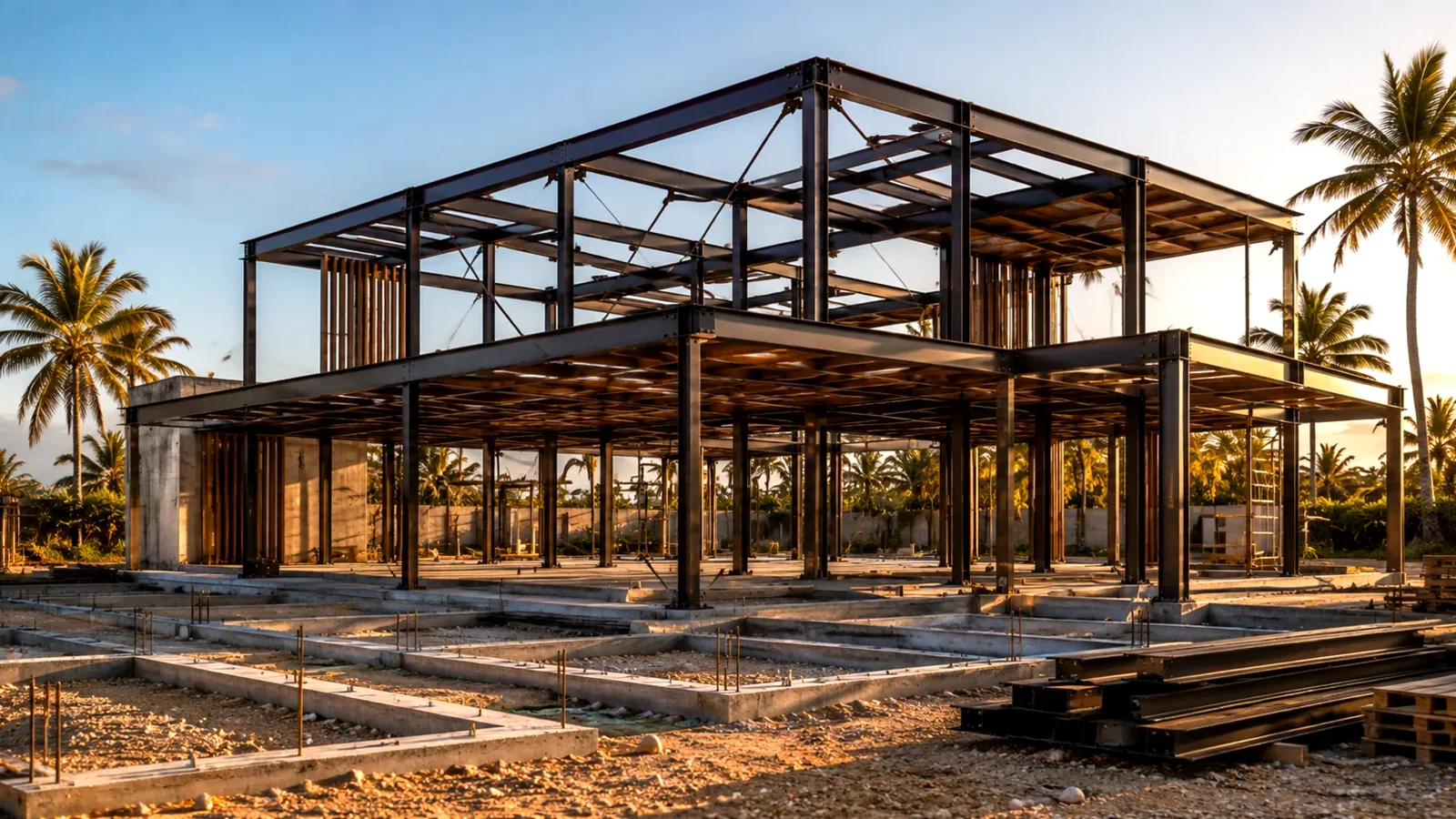
At SteelNest, we choose the system according to the programme. For small, repeatable units (studios, rooms, offices, lodges), refurbished containers and steel modules are hard to beat. For large volumes and high-end architecture, such as our Luxia villa, a load-bearing steel frame combined with prefabricated modules offers more freedom. Both approaches share the same logic: build in the workshop, assemble on site.
Which projects is it for?
Containers perform best where identical units are needed quickly: offices and site camps, student residences, lodges and eco-lodges, shops and extensions. We cover these three priority uses in our article Offices, lodges, student residences: 3 uses where modular makes the difference, and on the Build page.
How SteelNest supports you
SteelNest acts as a turnkey builder, as project manager (maîtrise d'œuvre) for your operation, or provides project management assistance if you already run your project. An architect and four engineering firms (structure, thermal & MEP, acoustics, geotechnics) secure every stage, from sketch to handover, in Dakar, on the Petite Côte and throughout Senegal.
Test your knowledge
One minute to check the key points of this article.
Question 1 / 3
Roughly how much interior space does a 40-foot container offer?
About 28 m²: the size of a studio, an office or a hotel room.
Question 2 / 3
What does a poorly insulated container become under the West African sun?
Serious insulation, a ventilated double roof and cross-ventilation are essential.
Question 3 / 3
For a large high-end villa, which system does SteelNest favour?
Containers excel for small repeatable units; a steel frame gives more freedom for large volumes.
Frequently asked questions
Is a container building durable in Senegal?
Yes, provided it is designed for the climate: high-performance insulation, a ventilated double roof, corrosion protection suited to the coast and regular maintenance. A container that is simply dropped and cut open ages badly; a properly engineered and protected module lasts.
Do you need a building permit for a container building?
A container building intended for permanent occupation follows the same rules as conventional construction: planning approval, safety rules and, for professional projects, technical inspection. We support you through these steps.
How long does it take to build with containers?
Modules are fitted out in the workshop while the foundations are built on site. Running both in parallel shortens the schedule significantly compared with a conventional build; the exact timeline depends on the number of modules and the finishes.
Can several containers be combined into a large building?
Yes, but every opening cut into a container requires reinforcement. For large volumes, a load-bearing steel frame combined with modules is often more relevant; containers excel at small, repeatable units.